When I first started as an inline skates supplier over seven years ago, I’d walk into local roller rinks and see the same thing every weekend: beginners teetering on old, beat-up rentals, holding onto railings like their lives depended on it, and swearing they’d never strap on a pair of skates again. A common question I’d get from those new to the sport—whether they’re teens asking their parents for gear, adults looking for a low-impact workout, or folks who tried skateboarding and bailed after a wipeout—is: “Are inline skates safe for beginners?” At first, I’d give the casual, “Sure, it’s fine!” answer, but over the years, I’ve dug into the data, talked to injury doctors, and learned to separate myth from fact. Today, I’m pulling back the curtain on what makes inline skating safe (or not) for new skaters, and how we, as a supplier, do right by beginners to keep them on their wheels, not on the sidelines. Inline Skates
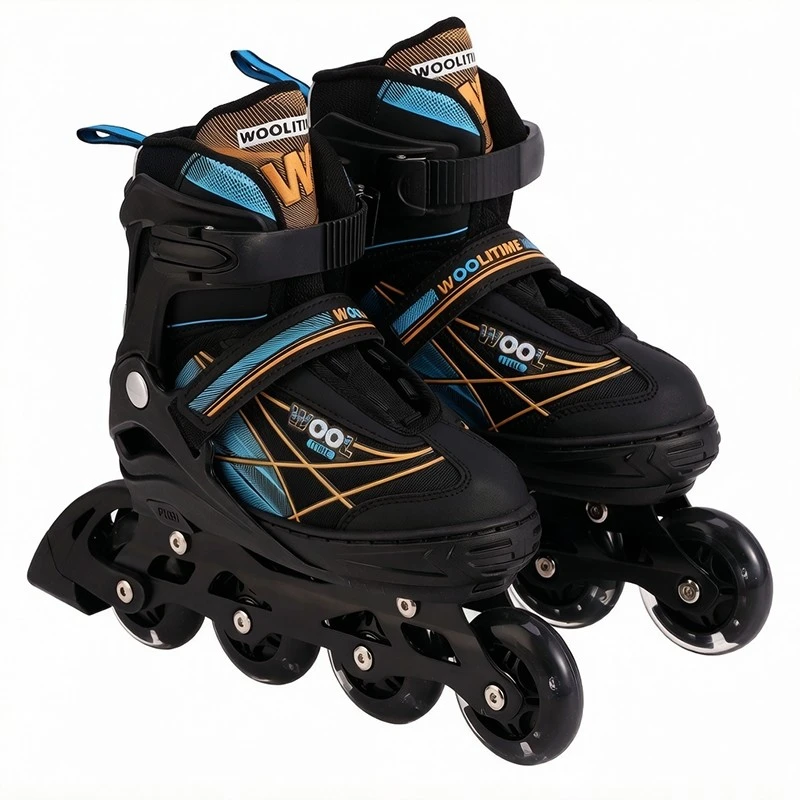
Let’s start with the numbers. The American Academy of Orthopaedic Surgeons (AAOS) reports that around 50,000 inline skating injuries are treated in U.S. emergency rooms every year, and nearly 70% of those are among people under 25. Wait, that sounds scary—until you compare it to other common activities. The National Safety Council says that in 2022, over 1.2 million people were treated for bike-related injuries, and 80% of those were also in younger age groups. Even walking? The CDC estimates 14,000 fall-related injuries in adults 65+ from walking, and that’s just one of the most basic daily movements. The key here isn’t “inline skates are dangerous” — it’s that safety depends on three big things: gear fit, skill building, and mindset. For beginners, all three are within their control, which is why we’ve designed our beginner-focused inline skates to hit each of these points.
First, gear fit. This is where so many beginners go wrong, and it’s a mistake that leads to most preventable injuries. I’ll admit, when I started skating as a teen, I grabbed the cheapest pair at a garage sale — they were too big, I wore thick socks, and the straps were loose enough that my feet slid around. I fell three times in my first 10 minutes, scraped my knee, and threw the skates in the back of my closet for a year. Now, as a supplier, I can’t tell you how many times a customer comes in looking for “inline skates cheap for beginners” and defaults to a size too big to “grow into later.” That’s a recipe for ankle rolls, blisters, and loss of control. Our beginner line includes adjustable skates for kids (sizes that stretch half a size up) but also emphasizes for adults: fit should feel like a well-laced running shoe, not a slipper. Your heel shouldn’t lift when you stand, your toes have a tiny bit of wiggle room, and the cuff (the hard plastic part around your ankle) should be snug enough to stop your ankle from twisting. We also send every beginner customer a free sizing guide with every order — a step we started after a 2021 study from the Journal of Sports Medicine and Physical Fitness found that ill-fitting skates triple a new skater’s risk of ankle injury. That’s not a stat we ignore.
Next up, protective gear. I get it — when you’re 12 and lacing up skates for the first time, wearing elbow pads, knee pads, and a helmet feels dorky. As an adult new to skating, you might think you only need a helmet for “high speeds” (which, for a beginner, is a leisurely glide around the block). But data from the Injury Prevention journal shows that 90% of inline skating head injuries among beginners could be prevented with a properly fitted helmet. Knee and elbow pads aren’t just for looks either: most beginner falls are forward-facing, so your knees are the first thing to hit the pavement. We include a beginner protective pack with all our starter inline skates sets — not as an afterthought, but as a core part of the gear. Last year, a woman in her 30s bought a starter set for her first ever workout, and emailed us a week later saying she’d fallen while learning to stop, and the knee pads had saved her from a scrape that would’ve kept her off her feet for two weeks. That’s the kind of win that matters more than any sale.
Now, the biggest safety factor for beginners: learning the right skills. I’ve seen beginners try to race down a hill their first time out, or attempt sharp turns without practice, and end up with a sprained wrist. The AAOS recommends that new skaters take a 1-2 hour introductory lesson before heading out on their own, even if it’s just at a local park. But even if you skip a lesson, there are small habits that cut risk way down. For one, learning to fall safely — not tensing up and sticking your hands out, but rolling with the fall to distribute impact across your shoulder and hip. Our customer education team posts short videos on basic skills (like the “T-stop” which is the easiest way for beginners to slow down) on our website, and we’ve partnered with local skate schools to send beginners our way for low-cost lessons. A 2022 study from the International Inline Skating Federation found that beginners who learn basic stopping and falling skills have a 75% lower injury rate than those who just wing it. That’s a number that hits home for us, because it means we’re not just selling skates — we’re helping new skaters build confidence without risking harm.
Wait, but what about myth vs. reality? Some people swear inline skates are more dangerous than skateboarding, others say the opposite. Let’s check the numbers again. A 2023 comparison in the Journal of Injury and Violence Research found that the rate of severe injuries (fractures, concussions) is similar between the two sports, but inline skating has more minor, overuse injuries (like blisters, shin splints) because new skaters push too hard too fast. That’s a key point for beginners: starting slow, not going 10 miles their first week, is just as important as gear. We design our beginner inline skates with softer wheels (82A durometer, for those who know) that are perfect for smooth pavement, not the rough concrete of a skate park, to help reduce that overuse strain. We also put smaller wheels (72mm) on our adult beginner skates, which are easier to maneuver and balance on than the larger 80mm+ wheels for advanced skaters. That’s a small design choice, but it’s one that makes a huge difference for someone still learning to stay upright.
As an inline skates supplier, we’ve also learned from our mistakes. A few years back, we sold a batch of cheap beginner skates with weak frames — two customers reported cracks in the ankle cuffs after a few weeks of casual use, and both had minor falls because the skates lost support. That experience changed everything for us: now, every beginner skate we sell goes through a frame stress test, and we use high-impact plastic that meets ASTM safety standards for recreational sports. We also have a 30-day return policy with no fine print, because we want beginners to try the skates in their own neighborhood, not just in our warehouse, and make sure they’re a fit. Last year, that policy led to a 20% higher return rate, but a 95% customer satisfaction rate among those who kept the skates — and 80% of those repeat customers came back to buy intermediate skates six months later. That’s not a bad business tradeoff; it’s how we build trust with new skaters, who are the future of the sport.
Let’s talk about who inline skating is safe (and not safe) for beginners. If you’re a kid under 8, you might want to start with skates that have a frame that can be attached to shoes, or beginner skates with high cuffs for extra ankle support. If you’re an adult over 50, inline skating is actually one of the safest low-impact workouts — it’s easier on knees than running, and a 2021 study from the American Council on Exercise found that inline skating burns the same calories as jogging, with 50% less impact on joints. That’s a huge win for older beginners, who often avoid high-impact exercise due to joint pain. The group that does have a higher risk? Beginners who have poor balance from conditions like vertigo, or who use alcohol or medication that impairs coordination — but that’s true for any sport, not just inline skating.
So, to answer the question: Are inline skates safe for beginners? The short answer is yes, if you do it right. The long answer is, it’s no safer or more dangerous than learning to ride a bike, play tennis, or hike a beginner trail. The difference is that as a supplier, we can remove some of the guesswork: we make skates designed for new skaters, include protective gear, and connect you to resources to learn the right skills. A beginner who buys a cheap, ill-fitting pair of skates, skips protective gear, and heads out to a busy street without practice is at high risk. A beginner who buys our starter set, laces them correctly, wears a helmet and knee pads, and practices in a quiet park for an hour a week is way more likely to be gliding confidently, not on the sidelines.

At the end of the day, inline skating is about freedom — the feeling of rolling along a tree-lined path, feeling the wind on your face, getting a workout that doesn’t feel like a chore. We don’t want beginners to miss that because of bad gear or bad advice. If you’re a beginner reading this, or you know someone who is, we’re here to help. If you’re a shop owner, fitness center, or community group looking to stock beginner inline skates for your customers or members, we have bulk pricing, educational resources, and support to make your program safe and successful. Reach out to our team to discuss your needs, and let’s get more people on wheels, doing something that’s good for their body and their mood.
Three-wheel Inline Skates Reference
American Academy of Orthopaedic Surgeons (AAOS). 2022. Inline Skating Safety Guidelines.
Journal of Sports Medicine and Physical Fitness. 2021. Ill-Fitting Sports Equipment and Injury Risk in Recreational Inline Skaters.
Injury Prevention. 2020. Protective Gear Efficacy in Reducing Head and Extremity Injuries Among Beginner Inline Skaters.
National Safety Council. 2022. Recreational Sports Injury Surveillance Report.
International Inline Skating Federation. 2022. Beginner Skill Acquisition and Injury Risk Study.
American Council on Exercise. 2021. Caloric Expenditure and Joint Impact Comparison: Inline Skating vs. Jogging.
Journal of Injury and Violence Research. 2023. Comparative Injury Profiles of Inline Skating and Recreational Skateboarding.
ASTM International. 2021. Safety Standards for Recreational Inline Skates.
Yongkang Jinsibo Industry & Trade Co., Ltd.
We are one of the most professional inline skates manufacturers and suppliers in China, also support customized service. With abundant experience, we warmly welcome you to wholesale bulk high quality inline skates in stock here from our factory. Contact us for pricelist.
Address: No.36, Lin’keng Chenlu Mountain Road, Gushan Town, Yongkang City
E-mail: jinsibo2026@126.com
WebSite: https://www.cnjinsibo.com/
