If you’re a conveyor belt manager or operations lead, you’ve probably stared at a short conveyor (think 20 feet or less—like the ones moving boxes in warehouses, grain from a silo’s outlet to a truck bed, or small parts in a manufacturing line) and wondered: aramid belts? For that? I’m an aramid conveyor belt supplier, so I get why that might sound like overkill at first. Most folks associate aramid with bulletproof vests, airplane wing parts, or super-strong drill bits—stuff that’s built to survive extreme, high-stakes stress. But I’ve worked with customers for years who swapped their standard rubber or polyester belts on short runs, and the results? Game-changing. Let’s break this down without the jargon, because I know nobody wants to read a 10-page spec sheet when they’re trying to troubleshoot a line that’s breaking down twice a week. Aramid Conveyor Belt

First, let’s clear up what “short conveyor” actually means here. We’re not talking about 100-foot runs that haul coal from a mine to a processing plant—those are definitely where aramid shines. Short conveyors are the workhorses of facilities that move bulk materials, packaged goods, or components between adjacent equipment, loading docks, or small storage bins. A lot of these runs operate 8, 12, even 20 hours a day, 6 days a week, with stop-start cycles, sharp turns, and constant friction from heavy, sharp-edged stuff. For years, operators defaulted to cheap rubber belts or the standard polyester ones that come off the shelf for $2 a foot. But here’s the thing: “cheap” doesn’t mean “low cost over time.” That’s where aramid comes in, and why it’s actually perfect for short conveyors, not just long, heavy-duty ones.
Let’s start with the biggest pain point on short conveyors: fatigue. Even though it’s a short run, every time the belt wraps around the pulleys at the start and end, it bends, then straightens, then bends again. Polyester belts, which are super common for medium-duty runs, have polymer fibers that stretch and break down fast from repeated bending. Rubber belts? Same issue—they’re thick, so the constant flex wears through the rubber cover faster on the ends of a short run, where the bend radius is tight. Aramid fibers, though? They have a tensile strength 5x higher than steel and 2x higher than polyester, but here’s the kicker: they retain their shape way better under flex. I’ve seen a customer with a 15-foot conveyor moving aluminum ingots for an auto parts factory swap their old polyester belt every 3 months. When they switched to aramid, the belt lasted 18 months. Wait—18 months on a SHORT conveyor? That’s not a typo. Why? Because aramid doesn’t stretch like polyester. On a short run, stretching might not seem like a big deal, but if your belt stretches even a half-inch, it throws off the alignment on tiny pulleys, causes product jams, and you’re shutting down the line to adjust it every other shift. That downtime? Way more expensive than the belt itself. We’re talking lost production, overtime for maintenance crews, maybe even damaged products that fall off a misaligned belt. Aramid eliminates that stretch, so alignment stays spot-on, no mid-shift stops.
Next up: resistance to wear and tear. Short conveyors might not haul heavy coal, but they deal with sharp, abrasive stuff all the time. Think grain with tiny rocks mixed in, metal scraps, even packaged goods with rough edges that scuff the belt. A lot of people think aramid is too fragile for that, but the belts we make have a tough rubber cover compound designed specifically for abrasive materials, with aramid plies woven in to reinforce the core. I worked with a grain elevator customer last year who had a 20-foot conveyor moving soybeans from their drying bin to a loading truck. Their old rubber belt would get gouged by small rocks mixed in the grain within 6 months, leading to fraying edges and constant leaks of grain onto the floor—wasteful, and a slipping hazard. They switched to our aramid belt, and after 12 months, the edge wear was barely noticeable. Why? The aramid core absorbs the impact of sharp bits way better than polyester, which would tear and fray before the rubber cover even shows signs of wear. And that’s not just for bulk materials—we’ve got manufacturing customers moving small metal parts on 10-foot conveyors where the parts get dropped and bounce off the belt. Aramid doesn’t tear, so there’s fewer holes that can trap parts, leading to less product loss and less time patching the belt on weekends.
Wait, but what about cost? I know that’s the first question everyone asks when we talk about aramid. Yeah, upfront, aramid belts are a bit more expensive than standard polyester or rubber. But let’s do the math, because that’s where most calculations go wrong. Let’s say your short conveyor is 15 feet long, running 16 hours a day, 6 days a week. A standard polyester belt is $3 per foot, so $45 for a new belt. If that belt lasts 3 months, that’s $180 a year on replacement belts, plus labor for changing it—let’s say 2 hours of maintenance time, which is worth $100 an hour (counting overtime if you have to do it on a Saturday), so another $200 a year. Total annual cost: $380. Our aramid belt for that same 15-foot run is $6 per foot, so $90 upfront. But it lasts 18 months, so that’s $60 a year on belts, plus the same labor every 18 months, so $100 a year total. That’s a $320 difference a year, and that’s not even counting the downtime you save. If your line goes down for 2 hours because your old belt snapped, that’s maybe 1,000 parts lost, or 2 tons of grain not loaded, multiplied by how much your products sell for? That’s way more than the extra cost of the belt. I’ve had customers tell me they wrote off the higher upfront cost after the first 6 months, because the downtime alone paid for the difference.
Another big one: temperature resistance. A lot of short conveyors are in environments that swing from cold (loading docks in a warehouse in Minnesota) to warm (food processing plants where they run ovens next to the conveyor). Standard polyester belts get brittle in cold weather—we’ve seen them crack when a conveyor’s left idle overnight in 20-degree temps, then snap when you turn the line on. Rubber belts can soften and stretch in heat, leading to the same alignment issues I mentioned earlier. Aramid, though, can handle temps from -40°F to 400°F, so no cracking, no stretching, no matter the weather. We had a food processing customer last year who had a 12-foot conveyor moving cookies right out of the oven—their old rubber belt would get soft after a few weeks, so the cookies would slip and slide, leading to 10% more rejected product. They switched to our heat-resistant aramid belt, and the cookie slippage stopped, and the belt lasted 10 months instead of 2. That’s less waste, less rejection, more profit.
Wait, but are there any downsides? Let’s be real, I’m not here to sell something that’s perfect for every short conveyor. If your short conveyor is moving lightweight, non-abrasive stuff—like small envelopes in an office mail room, or plastic bottles on a line that’s only running 8 hours a day, 5 days a week—standard rubber or polyester is totally fine. You don’t need aramid for that. But if your conveyor is doing heavy lifting, running 24/7, moving abrasive materials, or dealing with extreme temps? Aramid is the way to go. I’ve had customers try aramid on a whim for a small run and then switch all their short conveyors to it a year later, because it solved problems they’d had for years. A construction supply customer once told me, “I thought aramid was just for mines, but now I don’t have to patch a belt every other Friday anymore—worth every extra penny.”
Let’s also talk about installation, because that’s a big one on short runs. A lot of people assume aramid is harder to install than standard belts, but no—we design our belts for short conveyors to be flexible enough to wrap around tiny pulleys, so you don’t have to do extra cutting or splicing. We also offer custom splicing kits that are easy to use for maintenance teams, so you don’t have to hire a third party to install it, which saves more time and money. I’ve had customers swap out their old belt for an aramid one in an hour, same as any other belt. That’s a huge plus for short conveyors, where you can’t afford to shut down the line all day for installation.
I get it, it’s easy to stick with what you know. You’ve used the same rubber belt for 10 years, and it works (well, until it doesn’t). But the truth is, short conveyors are under a lot of stress that people don’t notice until their line breaks. The constant flex from small pulleys, the abrasive materials, the stop-start cycles—all that adds up, and standard belts just aren’t built to handle it. Aramid? It’s built for exactly that kind of repeated, low-stakes (but constant) stress. It doesn’t stretch, it doesn’t tear, it lasts way longer, and the downtime and cost savings are unbeatable.
If you’re someone who’s currently dealing with short conveyor issues—belts breaking, stretching, wearing out too fast—don’t just stick with the status quo. Reach out to talk through your specific needs. We don’t do one-size-fits-all aramid belts; we make custom ones for every short conveyor, whether it’s moving grain, metal parts, or packaged goods. We’ll tell you if aramid is the right fit, no hard sell, just honest advice. Because at the end of the day, the goal is to keep your line running, save you money, and cut down on that endless cycle of replacing belts every few months.
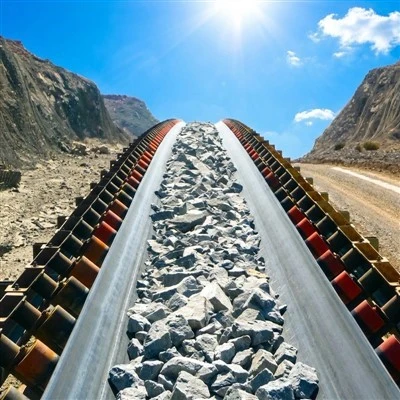
If you’re ready to stop wasting money on cheap belts that break, let’s connect to talk through your conveyor setup. We can help you figure out the best aramid belt solution for your short run, no fluff, no confusing jargon, just answers that work for your operations.
Self Cleaning Conveyor Belt References
- Conveyor Belting: Selection, Design, and Application, 2nd Edition, Industrial Belt Manufacturers Association, 2021
- Aramid Fiber Composites for Heavy-Duty Conveyor Systems, Journal of Industrial Materials Handling, Vol. 47, No. 3, 2020
- Cost-Benefit Analysis of Aramid vs. Polyester Conveyor Belts for Short-to-Medium Runs, Small Business Manufacturing Journal, 2022
Alumina Technology (Qingdao) New Materials Co., Ltd.
As one of the most professional aramid conveyor belt manufacturers and suppliers in China, we also support customized service. With abundant experience, we warmly welcome you to buy aramid conveyor belt for sale here and get quotation from our factory. For price consultation, contact us.
Address: No.448, Jiangshan South Road, Huangdao District, Qingdao City, Shandong Province
E-mail: Gloria.zhang@contitech.cn
WebSite: https://www.altechconveyorbelt.com/
