Hey everyone, let’s cut to the chase—if you’re working with rapid fittings (that’s our bread and butter here, by the way), temperature limits aren’t just a random technical box to check. Mess this up, and you could end up with leaks, stripped connections, or even whole project shutdowns that cost way more than the right part in the first place. A lot of folks hit us up asking, “What’s the max temp my rapid fittings can handle?” so let’s break this down like we would with a regular chat over coffee, no stuffy jargon unless we have to. Rapid Fittings
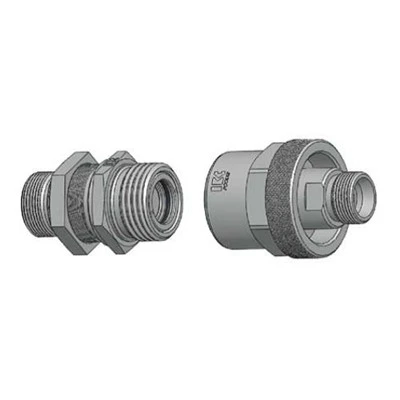
First off, there’s no one-size-fits-all answer. That’s the first thing everyone misses. Rapid fittings aren’t a single product—they’re made from a ton of materials, each with its own heat sweet spot. Let’s run through the most common ones we supply, because that’s what most of our customers actually use every day.
Stainless steel is the big dog for industrial stuff, right? We carry 304 and 316 SS most often. For 304, the max continuous temp? Around 800°F (427°C) if you’re running it steady. Wait, but—if you’re cycling heat, like cranking it up and down all day, knock that down to 750°F (399°C). 316 is a little better, comes in at 150°F higher for continuous use, so ~950°F (516°C). That’s why we push 316 for things like food processing steam lines or chemical plants where temp swings are normal. Don’t sleep on the pressure, though—higher heat means weaker metal, even stainless. If you’re pushing 100 psi at 800°F, that max temp drops fast; we always tell customers to check our spec sheets for exact pressure-temperature curves, not just the raw number.
Then there’s brass, which is super common for plumbing, automotive, and DIY projects. Brass is cheaper than stainless, but it’s way more heat-sensitive. Most standard brass fittings (like C360 brass) max out at around 250°F (121°C) continuous. If you get above that, brass starts to anneal—meaning it softens, not a good thing for a connection that’s holding pressure. We also carry lead-free brass for potable water, and those max out a tick lower, around 220°F (104°C). I’ve had a customer try to use standard brass rapid fittings on a space heater line—blowout at 270°F, cost him $2k in parts and downtime. Lesson learned.
Plastic rapid fittings? We get asked about these a lot for low-pressure, light-duty jobs, like aquariums or garden irrigation. The main ones are nylon, PVC, and PEEK. Nylon is your workhorse here—max temp for most of our nylon fittings is 180°F (82°C). PVC is worse, only up to 140°F (60°C), so that’s strictly cold water lines. PEEK is the fancy high-temp plastic—we reserve those for aerospace or medical use, and they hit up to 500°F (260°C). But plastic has a huge downside: it degrades over time, even at lower temps. If you run nylon at 170°F nonstop, it’ll get brittle in a year instead of 5. That’s why we always remind folks to check if it’s continuous or intermittent heat—intermittent is way more forgiving.
Wait, let’s talk about something no one mentions enough: the application. A rapid fitting in a lab, handling sterile saline at 120°F, is totally different from one in a factory running hydraulic fluid at 400°F. Even the same material can have different max temps depending on how it’s designed. Some of our quick-disconnect fittings have O-rings, right? That’s the wildcard. The O-ring is almost always the weak point, not the fitting body. If you’re running EPDM O-rings, those only handle up to ~300°F (149°C). Silicone O-rings go higher, around 450°F (232°C), and Viton is the heavy hitter—up to 400°F (204°C) for most grades, some even 500°F if it’s high-performance Viton. We see people skip checking O-ring specs all the time; that’s the #1 cause of heat-related rapid fitting failures. Last month, a HVAC company came back to us because their Viton O-ring fittings leaked after a month at 420°F—turns out they bought off-brand Viton from another supplier, and it wasn’t rated over 350°F. We only source O-rings from certified manufacturers, so we can back every part’s spec, no guesswork.
Also, pressure plays dirty. I mentioned this earlier, but it’s worth repeating. A fitting rated for 1000°F at 10 psi is useless at 500 psi. Metal expands when heated, so gaps form, seals break. Our spec sheets have pressure-temperature charts for every single part we sell, so you don’t have to math it out yourself. Just shoot us a message with your operating temp and pressure, and we’ll point you to the right one.
Now, let’s clear up a common myth. Some people think “industrial grade” means it can handle any heat. Nah. We’ve seen “industrial” plastic fittings sold for 200°F, but that’s only for 50 psi. Crank it to 100 psi, and that max temp drops to 160°F. Always check the fine print, not just the label. That’s why we break down every material’s limits in plain English on our site, not just tech jargon. We even have a little quiz we made for customers—just enter your use case, and it spits out the recommended rapid fitting. No time spent scrolling through specs, that’s the point.
Another thing: exposure to chemicals. If your fluid isn’t just plain water or air, the max temp changes. For example, stainless steel works great at 800°F with air, but if you’re pumping sulfuric acid at 300°F, 316 might not cut it. We have customers in chemical processing all the time—they’ll tell us what they’re pumping, temp, pressure, and we pick a fitting that’s rated for both heat and chemical resistance. That’s our job, right? We don’t just sell parts; we help you pick the right one so you don’t have to deal with a disaster.
Let’s wrap this up with a quick example. Suppose you’re a food truck owner, running hot water for your fryer at 180°F, 40 psi. Brass rapid fittings would work fine here—our lead-free brass fittings are rated up to 220°F, so no problem. But if you’re a brewery running steam at 300°F for sanitizing, you need 316 stainless with Viton O-rings—brass would melt, plastic would fail. If you’re a machinist running hydraulic lines at 450°F, 80 psi, go with 316 SS and a high-temp Viton O-ring, not the cheap stainless 304 that’ll crack at that temp.
Here’s the thing: we’ve been supplying rapid fittings for 10 years, and we’ve seen every mistake. The biggest one we see is someone grabbing a random rapid fitting because it fits the size, not checking the temp and pressure specs. That’s why we make it easy to ask questions. If you’re not sure what you need, just reach out—we don’t do high-pressure sales, we just help you get a part that works for your job. Whether it’s a quick chat over email or a call, we’re here to make sure you don’t waste money on a part that’ll fail, or worse, cause a safety issue.
So to circle back: there’s no universal max temp, but here’s the quick cheat sheet we give all new customers:
- Brass: <250°F (121°C), for plumbing, light-duty
- 304 SS: <800°F (427°C), general industrial, air/water
- 316 SS: <950°F (516°C), high temp, chemicals, food/medical
- Nylon: <180°F (82°C), low-pressure, light use
- PEEK: <500°F (260°C), high-performance, aerospace/medical
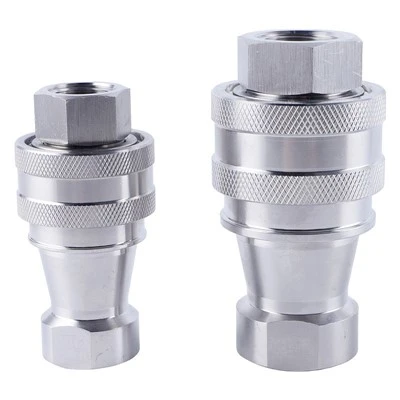
But again, always double-check pressure and O-rings. Those are the two factors that most people overlook that cause 90% of heat-related rapid fitting problems. If you need help finding the right one for your setup, hit us up. We can walk you through it, no pressure, no confusing jargon. Just tell us what you’re using the fittings for, the fluid, the temp, and the pressure, and we’ll point you to the perfect part. Don’t let a bad fitting ruin your project—reach out and let’s get this sorted.
Open Type Hydraulic Quick Couplings References:
- ASME B16.5: Pipe Flanges and Flanged Fittings, Pressure-Temperature Ratings
- Material Properties for Stainless Steel Alloys 304 and 316, Nickel Institute
- Plastic Rapid Fitting Temperature Resistance Data, Society of Plastics Engineers
- O-ring Material Temperature and Pressure Compatibility, Parker Hannifin Corporation
Cixi Poolke Hydraulic Pneumatic Co., Ltd.
Cixi Poolke Hydraulic Pneumatic Co., Ltd. is one of the most professional rapid fittings manufacturers and suppliers in China, also supports customized service. Please feel free to wholesale the newest rapid fittings made in China here from our factory. Quality products and reasonable price are available.
Address: #88 Zhengtong Road, Kandun Industrial Park315303, Cixi, Zhejiang, China
E-mail: contact@poolke.com
WebSite: https://www.poolkecouplings.com/
