Hey everyone, if you’ve ever driven down a highway and spotted that tall, single-sided metal tower standing alone on a hill, chances are that’s a monopole tower. As the owner of The Monopole Tower, I get asked this question all the time: “How far does a monopole tower actually transmit?” It’s not a straightforward answer—way more goes into it than just the tower’s height, right? Let’s break this down like we’re chatting over coffee, no stuffy jargon (I’ll keep the tech stuff simple, promise). The Monopole Tower
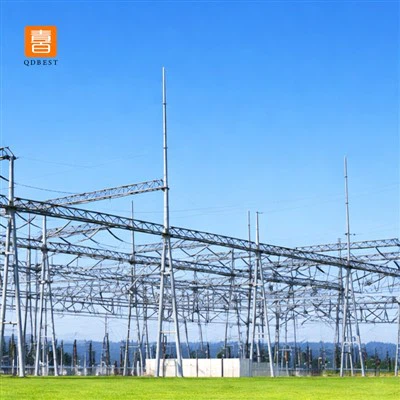
First, let’s get one thing straight: monopole towers are way more common than you might think. We supply ‘em for cell service, radio, even public safety stuff like emergency alerts. Unlike lattice towers that look like giant spider webs, monopoles are sleek, single pipes—hence the name. But their transmission range doesn’t work like a TV remote, where pressing a button makes signal jump 30 feet. It’s all about line of sight, frequency, and a bunch of real-world stuff that messes with signal.
Let’s start with the basics: what “transmit distance” actually means here. For cellular networks (the biggest use case for our towers these days), engineers usually talk about cell coverage area. A monopole tower’s signal doesn’t shoot straight out in a perfect circle; it’s shaped by antennas mounted on top, and blocked by trees, buildings, hills, even bad weather. I’ve had clients come to us thinking they need a 1,000-foot tower to cover a whole city, but that’s not how it works.
So, how far do they actually go? For your average 100-foot monopole (that’s the most popular size we supply for small towns and suburban areas), you’re looking at roughly 1 to 3 miles of usable cell coverage. Wait, that seems short, right? But if you crank that up to 200 feet—still manageable for most neighborhoods without being an eyesore—that jumps to 3 to 6 miles. Now, if you’re talking about a tall tower, like 500 feet or more (we do those too for rural areas where there’s nothing blocking signal), you’re looking at 10 to 15 miles, sometimes even 20 if the land is totally flat and unobstructed. But here’s the catch: that’s for UHF frequencies, which are used for cell phones and two-way radios. VHF, which is for stuff like FM radio or emergency services, has a longer wavelength, so that same 200-foot tower might hit 6 to 8 miles. Higher frequencies—like 5G, which uses mmWave—? That’s a different story. 5G monopoles only cover about ½ to 1 mile, because high-frequency signal doesn’t pass through walls or trees well at all. We’ve had to adjust our designs for 5G sites to put more smaller monopoles closer together, which makes sense when you think about it.
But wait, those numbers aren’t set in stone. Let’s talk about the stuff that messes with range, because that’s what I tell every client when they reach out. First, terrain. If you’re in a valley, even a 300-foot tower might only cover 4 miles, because a hill in the way is a wall for the signal. If you’re on a mountaintop, that same 300-foot tower could blast 12 miles easy. Then there’s clutter: downtown areas with skyscrapers will chop up signal so bad you might only get 1 to 2 miles out of a tower that should do 5. Even something as simple as a grove of old oak trees can cut signal by 50% in a forested area.
Another big one: antenna type. The antennas we mount on monopole towers aren’t one-size-fits-all. For a client needing to cover a rural farm, we use directional antennas that focus signal one way, which makes the range longer in that direction, even if it’s shorter the other way. For suburban areas, we use omni-directional antennas, which send signal in a 360-degree circle, so range is a bit shorter but covers a whole neighborhood. We don’t just ship towers out the door—we work with every client to pick the right antennas based on their exact coverage needs, because that’s part of being a good supplier, not just selling metal pipes.
Let me give you a real example from a project we did last year. A small town in western North Carolina came to us saying their fire department had bad two-way radio coverage in the eastern part of the county. The county was rolling hills, no big cities, so they thought they needed a 600-foot tower. We talked them down to a 250-foot monopole (way cheaper and less of a eyesore) and paired it with VHF directional antennas aimed right at the part of the county they needed to cover. That setup ended up giving them 7 miles of solid coverage instead of the 12 they thought they needed. Turns out, they were right that the 600-foot would work, but our design saved them $150k on the tower itself, and the coverage was just as good for their actual needs. That’s the kind of thing I live for—helping clients not waste money on stuff they don’t need.
Now, let’s clear up a common myth: some people think monopole towers have shorter range than lattice towers. Nope, not really. The range depends almost entirely on height, frequency, and antenna type, not the tower’s shape. Lattice towers might be taller (since they’re more stable for really high heights), but a 200-foot monopole has the exact same potential range as a 200-foot lattice tower. Monopoles are just easier to install, cheaper for mid-range heights, and blend in better with the landscape—why we supply 90% of our towers as monopoles, honestly.
Wait, what about public safety applications? That’s a huge part of our business too. Police, fire, EMS—they need reliable signal, no dropouts during emergencies. For those, we often work with 150 to 250-foot monopoles, since they’re less intrusive than big lattice towers. A local fire department in Ohio used one of our 220-foot monopoles a couple years back, and when they had a big structure fire in a suburb 5 miles away, their radios worked the whole time. No dead zones, no static—exactly what they needed. That’s way more important than any fancy number about range; it’s about actually reaching people when they need help.
Another thing to consider: future upgrades. A lot of our clients don’t just need coverage today—they need to expand in 5 or 10 years. Our monopole towers are designed with extra space for antennas and equipment, so you don’t have to tear down the whole tower when you want to switch to 5G or add more cell carriers. I’ve had clients who thought a smaller tower was too short, but we work with them to account for future needs. For example, a 200-foot monopole can easily handle adding 5G antennas later, so you don’t have to buy a whole new tower. That’s a big selling point for us, because we’re not just a one-time supplier—we’re a partner for the long run.
Let’s talk about what affects range that’s even more out of your control: weather. Heavy rain, snow, even humidity can absorb some of the signal, especially higher frequencies. That’s why rural areas might see a tiny drop in range during a big thunderstorm, but for the most part, it’s not a big issue. Monopole towers are built to withstand wind, ice, and all that stuff, so the signal stays consistent even in bad weather. We use galvanized steel for all our towers, so they don’t rust, which means they last 30+ years with minimal maintenance—another thing we always mention to clients.
Now, I know some of you are probably thinking, “Okay, that’s all well and good, but I need a specific answer for my project.” The problem is, there’s no one-size-fits-all number. A monopole tower’s range isn’t a fixed measurement; it’s custom to your location, what you’re using the signal for, and the obstacles in the way. That’s why we don’t just list a range on our website—we ask clients to send us their location, what type of service they need, and what area they want to cover, then we do a site survey and calculate the exact range they can expect.
I’ve had people ask, “Can I get a monopole tower that covers 20 miles?” Sure, if you’re on a flat plain with no hills or buildings, 500 feet or taller, using low frequency. But that’s rare, and you’d probably need multiple antennas to cover that whole area without dead spots. For most people, 3 to 10 miles is the sweet spot for monopole towers, depending on their needs.
Let me wrap this up, because I know you’re probably wondering what to do next if you’re in the market for a monopole tower. If you’re a property owner, a municipal official, or a telecom company needing coverage, don’t just guess the range or the tower height. Reach out, tell us what you need—whether it’s for cell service, public safety, radio, whatever—and we’ll walk you through the whole process. We’ll talk terrain, frequency, antennas, even local regulations that might affect where you can build the tower.
At The Monopole Tower, we don’t just sell a piece of metal. We’ve been in this for years, and we’ve installed hundreds of towers across the country. We know what works, what doesn’t, and we’re here to make sure you get a tower that does exactly what you need, without overpaying for stuff you don’t. No sales tricks, no jargon, just straight talk about range and coverage.

If you’re tired of dead zones, bad radio service, or just want a reliable tower that fits your budget, get in touch with our team to chat about your project. We’re happy to answer any questions, walk you through our process, and even do a free site assessment to figure out the perfect tower and setup for you.
The Monopole Tower References:
- Telecommunications Industry Association. (2021). Monopole Tower Design and Coverage Guidelines.
- Federal Communications Commission. (2022). Radio Frequency Signal Propagation for Cellular and Public Safety Networks.
- National Association of Tower Erectors. (2020). Monopole Tower Installation and Performance Standards.
- Wireless Infrastructure Association. (2023). 5G Small Cell and Monopole Coverage Range Analysis.
- U.S. Department of Homeland Security. (2021). Public Safety Communication Range Requirements for Rural and Suburban Areas.
Qingdao BEST Steel Structure Co., Ltd.
Qingdao BEST Steel Structure Co., Ltd. is one of the most professional the monopole tower manufacturers and suppliers in China. We warmly welcome you to buy customized the monopole tower made in China here from our factory. If you have any enquiry about OEM service, please feel free to email us.
Address: Jiaobei Industrial Park, Qingdao, China
E-mail: salesmanager@qdbsstower.com
WebSite: https://www.qdbsstower.com/
