If you’ve ever walked through a metal fabrication shop, you’ve heard that low, rhythmic whine of a reaming machine cutting a smooth, precise hole—each cycle making parts that end up in everything from automotive engines to wind turbine gears. As someone who’s spent 12 years selling these machines, I get asked one question more than any other: “How long will this thing actually last?” It’s not a trivial question. A reamer isn’t just a piece of equipment; it’s a workhorse that ties up production hours, impacts part quality, and can sink a small business if it fails prematurely. Today, I want to break down what determines a reaming machine’s service life, what’s a real benchmark, and why choosing the right machine (and using it right) makes all the difference. Reaming Machine
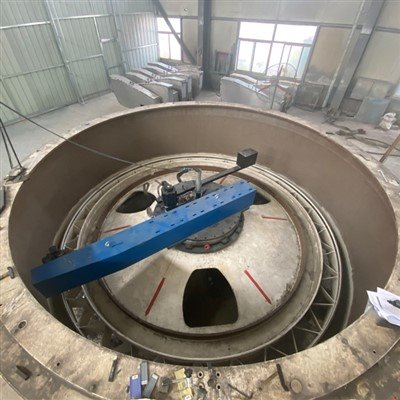
Let’s start with what a reaming machine does, because that context shapes its lifespan. Unlike a drill, which carves out a rough hole, a reamer cuts away tiny bits of material—usually just 0.001 to 0.015 inches per pass—to create a hole that’s not just the right size, but perfectly smooth and round, within tolerances as tight as 0.0001 inches. That precision means these machines endure constant friction, high spindle speeds, and heavy loads on their cutting edges and structural components. Someone who uses a reamer once a month in a small workshop will have a different experience than a 24/7 high-volume auto parts plant, so service life isn’t a one-size-fits-all number.
First, let’s talk about the core components that drive longevity. The machine’s frame is the backbone. Most quality reaming machines use heavy-duty cast iron, not thin steel tubing. Cast iron dampens vibration far better than steel, which is non-negotiable for holding tight tolerances over time. A cast iron frame that’s properly stress-relieved (a process that heats the metal to remove internal stresses from manufacturing) won’t warp, even after years of being moved around, bolted to a floor, or subjected to constant heat from cutting tools. I’ve seen a 20-year-old reamer with a cast iron frame that still holds ±0.0002 inch tolerance, while a cheaper steel-frame machine from a no-name brand started drifting after 5 years. That’s not a coincidence.
Next is the spindle, the part that holds the reamer bit and spins it at thousands of RPM. Spindles come in two main types: belt-driven and direct-drive. Belt-driven spindles are simpler, easier to repair, and tend to last longer in high-demand environments—though you have to replace belts every few years. Direct-drive spindles are more precise, with less vibration, but they rely on precision bearings that can wear out faster if not properly lubricated. A high-quality spindle from a reputable manufacturer, with sealed, precision-ground bearings, should last 15 to 20 years in normal use if you stick to a consistent maintenance schedule. The cheap spindles on discount reamers? They might start wobbling after 3 to 5 years, even with regular oil changes.
Then there’s the cutting tool itself—wait, hold on. A lot of people mix up the reaming machine (the whole unit: frame, spindle, controls, feed mechanism) with the reamer bit (the replaceable cutting tool). That’s a critical distinction. The service life I’m talking about here is the machine itself, not the individual bits. Bits are consumable, made of high-speed steel, carbide, or diamond-coated material, and they need to be replaced every few weeks or months depending on use. The machine is what you expect to still be running strong decades down the line.
Now, let’s get to the real numbers. I’ve tracked hundreds of my customers’ machines over the years, and here’s what I’ve seen: under light, intermittent use (1 to 2 shifts a week, cutting soft materials like aluminum or mild steel, no heavy custom jobs), a quality reaming machine can easily last 25 to 30 years. I have a customer in a small aerospace job shop who’s been running a reamer we sold him in 1998 for occasional prototype parts. He just sent us a photo last month of it working on a new missile component, and the spindle still runs as smooth as the day he bought it. That’s not an anomaly for a well-built machine.
Under medium use (two 8-hour shifts a day, 5 days a week, cutting a mix of soft and hard steels for automotive parts), the service life drops to 15 to 20 years. These machines take a beating: constant operation, more material load on the tools and spindle, regular setup and tear-down for different parts. The maintenance routine here gets even more important—skipping a lubrication cycle one week might not matter, but skipping it for a month will speed up wear on the feed screws and bearings.
Then there’s heavy, high-volume use (three 8-hour shifts a day, 6 days a week, cutting hard materials like hardened tool steel or titanium for medical devices or heavy equipment). This is where service life gets compressed: 8 to 12 years. I have a customer in a midwestern automotive plant that runs three reamers 24/7 for engine cylinder head production. Every one of those machines is 10 years old, and they’re already budgeting to replace two of them next year. The wear here is relentless—every hour, the spindle is spinning, the feed is moving, the frame is absorbing vibration. Even with daily maintenance, components like the linear guide rails and ball screws will start to wear beyond tolerance, leading to sloppy cuts.
But here’s the thing: those numbers are just averages. I’ve seen a cheap, no-name reamer die after 3 years, even under light use, because their frames are made from thin steel, their spindles are poorly machined, and their controls are flimsy. And I’ve seen a premium reamer last 35 years because the owner took care of it—regular lubrication, replacing worn belts and bearings before they caused damage, calibrating it every quarter, and storing it properly when it’s not in use. Maintenance isn’t just a suggestion; it’s the biggest factor in extending a reaming machine’s life more than any other.
Let’s talk about the most common things that cut a reamer’s life short, because avoiding these mistakes is what will make your machine last. First, skipping calibration. A lot of operators think, “If it’s cutting holes that look okay, it’s fine.” But over time, even a tiny shift in the spindle alignment or feed rate will cause the machine to work harder, leading to faster wear. Calibrating your reamer every 3 months (or more often if you’re running high-volume production) can add 5 to 10 years to its life. Second, using the wrong cutting tools. If you’re running a carbide reamer in a machine that’s only rated for high-speed steel, you’ll put way more strain on the spindle. If you’re using worn, dull reamer bits, the machine has to push harder to cut, wearing out feed screws and motors faster. Third, poor environmental conditions. If your shop has dust, metal shavings, or coolant leaking onto the machine, that gunk will get into the bearings and guide rails, causing abrasion and wear. A reamer kept in a clean, climate-controlled shop will last 2x longer than one in a dusty, unmaintained shop floor. Fourth, overloading the machine. Every reaming machine has a maximum cutting load, listed in the manual. Pushing it beyond that—say, trying to cut a 1-inch hole in titanium with a machine rated for 0.5-inch maximum—will warp the frame, crack the spindle housing, or burn out the motor in months.
I want to also address a myth I hear all the time: “Newer is always better.” Sure, modern reaming machines have fancy touchscreen controls, automatic tool changers, and IoT sensors that track performance. But a quality reamer from 15 years ago isn’t automatically worse than a new budget model. I had a customer who traded in a 10-year-old machine from us for a new “premium” model last year, and he told me the old one cut holes just as accurately, but the new one had a few flimsy parts that made it less reliable. The key is: look at the build quality, not just the year.
So, how do you know when a reaming machine is reaching the end of its service life? It’s not when it stops working—it’s when it stops working well enough for your needs. The signs are: it can no longer hold the required hole tolerance, it vibrates excessively during operation, the spindle makes unusual noises, or it requires constant repairs that cost more than half the price of a new machine. At that point, you have a choice: rebuild the machine or replace it. A full rebuild on a quality reamer can cost 40 to 60% of the price of a new one, and it will add 5 to 10 years of service life—something to consider if you’re attached to a machine that’s worked for you for decades.
As a reamer supplier, my job isn’t just to sell you a machine—it’s to make sure it lasts as long as you need it. That’s why when a customer comes to me asking about service life, I don’t give them a number. I ask them three things: how many shifts a day do you run it, what materials do you cut, and what tolerance do you need for your parts. That gives me the context to recommend a machine that’s built for their use case, plus a maintenance checklist to help them get the most out of it.
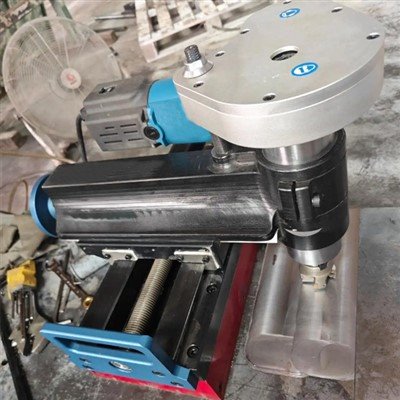
If you’re in the market for a reaming machine, or you’re wondering how to extend the life of the one you already have, the best next step is to reach out. I’ve worked with shops big and small, from prototype labs to large manufacturing plants, to find machines that fit their needs, not just their budget. We can walk through your production schedule, your part requirements, and show you how a quality-built reamer can be an investment that lasts for decades, not just a few years.
Circular Mill References
- Manufacturing Process Equipment Maintenance and Safety, 2nd Edition; Richard H. Dyer; Goodheart-Willcox Publisher, 2020.
- Metal Cutting Principles, 3rd Edition; Milton C. Shaw; Oxford University Press, 2015.
- "Lifespan Analysis of Industrial Machine Tools"; Journal of Manufacturing Systems, Vol. 45, 2017, pp. 182-190.
- "Maintaining Precision in Reaming Operations"; Modern Machine Shop, August 2021.
Shangqiu JDA Machinery Technology Co., Ltd.
With abundant experience, we are one of the most professional reaming machine manufacturers and suppliers in China. We warmly welcome you to buy cheap reaming machine for sale here from our factory. Quality products and reasonable price are available.
Address: No. 55 Pingyuan Middle Road, Liangyuan District, Shangqiu, Henan, China
E-mail: sales@jdamachines.com
WebSite: https://www.jdamachines.com/
