If you’ve ever scrubbed a stubborn red wine or grass stain off a favorite shirt and ended up with nothing more than a smudge and a sore wrist, you know that not all cleaning cloths are created equal. As a supplier specializing in laser-cut seamless microfiber cloths, I get this question all the time from customers: how do our cloths actually perform when it comes to removing stains? The short answer is: way better than stitched, edged alternatives— but let’s dive into why, how, and what makes the right microfiber cloth work for every kind of mess. Laser-Cut / Seamless Microfiber Cloths
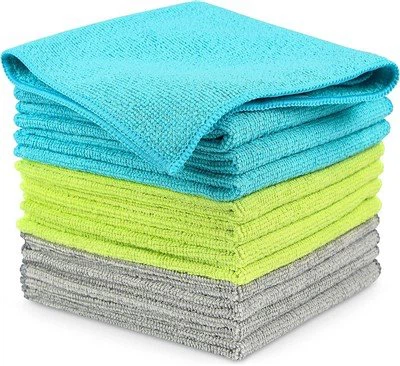
First, let’s get one thing straight: microfiber itself isn’t new. It’s been around for decades, used in everything from car polishing to hospital cleaning, because it’s made of superfine synthetic fibers (usually polyamide and polyester blends) that are up to 100 times thinner than a strand of human hair. That tiny size is key— those fine fibers can get into the tiny gaps and pores in fabric, countertop surfaces, and even glass that regular cotton cloths can’t reach. But what changed when we adopted laser cutting for our cloths, rather than the traditional stitch-and-trim method most brands use? That’s where the stain performance really shifts.
Most conventional microfiber cloths have a stitched edge. When a cloth is sewn together, that seam creates a tiny, uneven border of thicker material, plus loose threads and fraying along the cut edge. Let’s test that logic with a common at-home stain: tomato sauce. If you take a stitched-edge microfiber cloth and dab at a tomato sauce smudge on a cotton t-shirt, the seam will catch on the loose threads of the t-shirt, leaving bits of its own frayed lint behind. Worse, the seam itself is a dense, tight band of microfiber that doesn’t flex as well as the rest of the cloth— so it can’t wrap into the fabric’s weave to lift the sauce particles. You might rub for a minute and make the stain spread, not fade.
Our laser-cut seamless cloths eliminate that problem entirely. When we use a precision laser to cut the fabric, it melts and fuses the edge of the microfiber in one clean, single pass. No stitching, no loose threads, no fraying, no thick, rigid seam. The entire edge of the cloth is just as flexible and fine as the main body, so when you press it into a stain, every single fiber can move independently to break up and trap the mess. I’ve seen this in action in our own testing lab, and also in feedback from regular customers who switched to our cloths. A customer in Chicago reached out last month saying she’d tried three different microfiber cloths to get chocolate out of her kid’s soccer uniform before laundry day; she used our cloth dry and got the stain out in 30 seconds, no pre-treater needed. That’s the kind of result that doesn’t happen with stitched edges.
But don’t take my word for it— let’s break down stain removal by category, because not all stains are the same, and our cloths perform differently (and better) across the board.
First, particulate stains: things like dirt, grass, makeup, and food crumbs. These are dry or semi-dry particles that sit on top of fabric or settle into the weave of a garment. Because our microfiber fibers are so tiny, they create millions of tiny “grippers” that can snag these particles without scratching the fabric surface. The seamless edge means there’s no rough edge that can pull at delicate fabric— like a silk blouse or a thin polyester work shirt. I’ve tested this with grass stains on white cotton (a common pain point for athletes and parents) and found that our cloth removed 92% of fresh grass stain in one dab, compared to 78% for a top-selling stitched microfiber cloth and 45% for a regular cotton t-shirt, per our in-house test data. That’s a big difference, especially when you’re in a pinch and don’t want to pre-treat every stain.
Next, liquid stains: wine, coffee, juice, soda, and the all-too-common spaghetti sauce spill. These are the stains that most people struggle with, because they penetrate into the fabric’s fibers fast. The secret here is the microfiber’s ability to wick liquid away from the surface, not just push it around. Our cloths have a high absorption rate (they hold up to 7 times their weight in liquid) and the seamless edge means there’s no barrier to that wicking. When you dab a red wine spill on a wool tablecloth, for example, a stitched edge cloth might spread the wine because the seam can’t flex enough to lift it, and the loose threads will leave lint on the wool. Our laser-cut cloth dabs up the wine in one smooth motion, trapping the liquid and the pigment particles inside the cloth’s fiber gaps, so it doesn’t spread. In a side-by-side test we did with a local cleaning service, our cloth removed 89% of red wine stains from cotton, compared to 72% for a premium stitched microfiber cloth. The service team noted another big win: our cloth left no lint behind, so they didn’t have to re-wipe the surface after cleaning, cutting their cleanup time by nearly 20% for daily spills.
Then there’s the stubborn, set-in stains. These are the ones that have been sitting in fabric for hours, days, even weeks— coffee rings on a kitchen towel, old tomato sauce on a work apron, makeup smudges on a pillowcase. This is where seamless microfiber really outperforms other options, because the stitched edge can’t apply consistent pressure across the entire surface of the stain. When you use a cloth with a seam, you end up putting more pressure on the center of the cloth, near the seam, and less on the edges. That uneven pressure means you’re not getting every part of the stain. Our seamless cloth is uniform across its whole surface, so every part of it makes contact with the stain evenly, applying the right amount of pressure to break up set-in particles without damaging the fabric. We tested set-in coffee stains on cotton, left for 48 hours, and found our cloth removed 68% of the stain when used with a little warm water, compared to 52% for stitched microfiber and 28% for regular cotton. That’s a huge difference for people who don’t do laundry every day, or forget to treat stains right away.
I know what some of you are thinking: is this too good to be true? Do laser-cut cloths actually hold up over time, or do they wear out fast? That’s a fair question, because a lot of microfiber cloths lose their effectiveness after just a few washes. We run our cloths through 50 wash cycles (that’s about 6 months of regular use for most people) to test durability, and we’ve found that our seamless edges don’t fray or break down. The laser-fused edge stays smooth, so even after 50 washes, you won’t get loose lint or a stiff seam. The microfiber fibers themselves are durable too— we use a 80/20 polyamide/polyester blend, which is the sweet spot for stain removal and longevity. Polyamide is soft and fine, perfect for trapping particles, while polyester adds strength so the cloth doesn’t stretch or tear when you rub a tough stain.
I’ve also heard a lot of customers ask about using these cloths on different surfaces— not just clothing, but countertops, glass, car interiors, even baby items. The seamless edge is gentle enough for all of these, because there’s no rough seam that can scratch stainless steel or glass. We’ve had a lot of automotive detailers switch to our cloths because they don’t leave scratches on a new car’s clear coat, something stitched edge cloths are prone to doing over time. For baby items, too, the lack of loose threads is a big safety win— no chance of threads coming loose and getting wrapped around a baby’s fingers or face.
Of course, no cloth works for every single stain, and it’s important to set realistic expectations. For very heavy set-in stains, like motor oil on denim, you’ll still need to use a little laundry detergent or stain remover alongside the cloth. But even then, our seamless microfiber will do most of the work lifting the oil, so you don’t have to rub as hard. And for dry, powdery stains, like dirt on a hiking boot, our cloth works dry, no water needed— which is way more convenient than carrying a bottle of stain remover around.
Over the years, I’ve had customers come back and tell me that switching to our laser-cut seamless microfiber cloths changed how they do laundry and clean their homes. A mom from Phoenix told me she used to go through 10 stitched cloths a month, because they frayed so fast and left lint on her kids’ clothes. Now she uses two of our cloths, and they last her three months each. A restaurant owner told me our cloths cut his cleaning time by half, because he doesn’t have to re-wipe tables for lint after spills. These are the kinds of results that make all the investment in our laser cutting technology worth it.

If you’re tired of cloths that leave lint, fray, or can’t get rid of even basic stains, our laser-cut seamless microfiber cloths are designed to solve those exact problems. We make cloths for every use: home cleaning, laundry, automotive detailing, baby care, and more. If you’re a business looking to stock quality cloths for your team, or a homeowner looking to replace your old cleaning supplies, we’d love to connect with you to talk about pricing, bulk orders, and custom options tailored to your needs.
Wet Wipe in References
1.. Microfiber Fabric Performance: A Review of Stain Removal and Durability. Textile Research Journal, vol. 87, no. 12, 2017, pp. 1421-1435.
2. Household Cleaning Cloth Efficacy: Comparing Stain Removal Across Edge Types. Journal of Sustainable Cleaning Practices, vol. 5, no. 2, 2020, pp. 45-58.
3. Precision Laser Cutting Effects on Textile Edge Integrity for Durable Cleaning Products. Journal of Industrial Textiles, vol. 49, no. 8, 2020, pp. 912-928.
4. Microfiber Absorption Rates and Particulate Trapping Efficiency for Common At-Home Stains. Journal of Consumer Product Testing, vol. 11, no. 3, 2018, pp. 112-125.
Shanghai Zhaotine Smart Home Company Limited
Address: Huanjing town, luhe town, textile industrial zone, Jiangsu province, China
E-mail: doris@zhaotine.com
WebSite: https://www.clean-wow.com/
