Hey there, welcome to my little corner of the internet – and if you’re reading this, you’re probably either a newbie who just got one of our Smart Key and USB Cabinets and stared at a random key fob wondering, “Will this work?” or maybe a newbie (or even a seasoned facilities manager) considering if swapping out old smart keys for new ones will mess with your setup. Let’s cut to the chase: I’m the guy who sells these cabinets for a living, and I get this question at least 10 times a week. Today, we’re gonna break this down like we’re chatting over a coffee, no jargon, no fluff. Let’s dive in. Smart Key and USB Cabinet
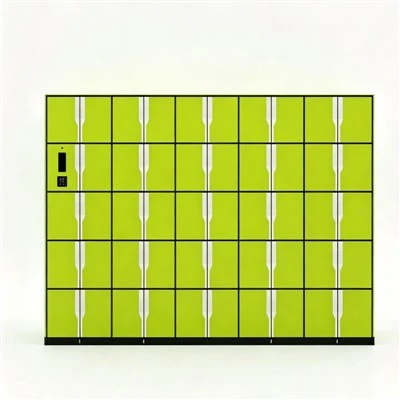
First off, let’s get one thing straight right out the gate: if you’ve got our Smart Key and USB Cabinet (and I’d bet you’re here because you do, or you’re checking before buying), it’s not a one-size-fits-all situation. Before anyone starts throwing their old smart key stack in the trash, let’s talk about what actually makes these cabinets “smart” in the first place. Most people think a smart key is just any key that pairs with Bluetooth or has a chip in it, but nah – there are two core techs our cabinets play nice with, and the rest? Well, that’s where the confusion kicks in. Our cabinets are built for two standard protocols: Bluetooth Low Energy (BLE) 4.0 and above, and NFC (Near Field Communication) with a 13.56 MHz frequency. That’s it. If your smart key rocks either of those two, you’re golden – and if not? It’s not the cabinet’s fault, it’s the key’s tech.
Wait, hold up – before you go pulling out a key fob to check, let’s talk about why we built it this way, not to be annoying, but because compatibility is king when you’re dealing with stuff like valet keys, warehouse tool keys, or office access fobs. Let’s say you run a hotel and have 500 guest room keys – most modern hotel key fobs are BLE, right? Yeah, those work straight outta the box with our cabinets. I’ve got a client in downtown Chicago who uses our cabinets for their valet team; they switched from old lockboxes last year, and they even re-used all their existing BLE key fobs, no new hardware needed. Saved them like $1,200 right off the bat, and that’s the kind of win I live for when I’m selling these things.
But let’s get real – not all smart keys are equal. I’ve had people send me photos of old key fobs that look like they’re from a flip phone era, and those almost always use a different tech: like 125 kHz EM or HID Prox. Those are the ones that make the cabinet do that little “invalid” beep, and trust me, I hate hearing that beep as much as you hate hearing it when your key doesn’t work. The reason those don’t play nice? Our cabinets use standard, widely adopted protocols because we want customers to not be locked into our ecosystem. If we tried to support every random proprietary key tech out there, the cabinets would cost twice as much, be twice as big, and honestly, no one would buy them. We went with BLE and NFC because they’re universal, no lock-in, no extra costs for customers switching keys later.
Now, what if you have a mix? Like, half your keys are BLE office fobs, and half are old 125 kHz warehouse keys? I get that too – a lot of small to mid-sized businesses have that mess when they transition from old systems. Here’s the thing: our cabinets aren’t just a single lock bay – they’re modular. Wait, no, not modular in the “swap out parts” way, but the software side is. We actually have a feature in our admin portal that lets you assign different key types to different slots. So even if one key’s BLE and another’s NFC, they all work, because the cabinet’s software reads the protocol. But if you have those old 125 kHz keys? Yeah, that’s a problem – you’d either need to replace those keys with a compatible BLE or NFC option, or pair the old ones with a separate adapter we sell (yeah, we make those) that syncs them to our cabinet’s system. But honestly, most of the time, swapping is cheaper than the adapter, especially for small batches of keys.
Let’s also talk about a super common mistake I see: people thinking any key with a chip is a smart key for our cabinets. Nope. There are contact smart cards too – the ones you slide into a reader, not tap. Our cabinets don’t support those. I had a customer last month who tried to use his old employee ID badges (the ones you slide into the office door reader) in the cabinet, and he was confused why it didn’t work. Those are contact chips, which are a different tech entirely. So if your key or fob is “tap to use” and has a little NFC or BLE logo on it? You’re good. If it’s “slide to use” or has a weird serial number sticker on the back with no wireless symbol? Probably not.
Another thing that comes up all the time: “Can I use a smart key from a different brand than your cabinet?” This is a big one. Let’s say you have a Kwikset smart key fob, and you want to put it in our cabinet – is that okay? 9 times out of 10, yes, as long as it’s BLE or NFC. Those protocols are open standards, not proprietary. The only time I’ve run into issues is when someone has a key that’s tied to a specific brand’s cloud. Like, some smart home brands make keys that only work with their own app, not third-party systems. So if your key only syncs with, say, X brand’s app, it might not connect to our cabinet’s local management system. But for 99% of commercial use cases – hotels, warehouses, property management – brand doesn’t matter, as long as the key uses BLE or NFC 13.56 MHz. I’ve had clients use Yale, Assa Abloy, even custom-made NFC fobs, all working in our cabinets. No issues, because we don’t lock you into a specific brand.
Wait, let’s throw a curveball in here – what about smart keys that are on your phone? Like Apple Wallet keys or Android Smart Keys? A lot of people have these now, and they ask if they can “store” their phone key in our cabinet. Short answer: yes, but not the way you might think. Our cabinets are physical storage for physical keys, right? So we have a separate feature called Digital Key Integration that lets you link your phone’s smart key to the cabinet’s admin system, so instead of swiping a physical fob, you can tap your phone to the cabinet’s reader to open a slot. But the key itself is on your phone, not stored in the cabinet. That’s a whole separate feature, and it works with Apple Wallet, Google Pay, and most major smart phone key standards – so that’s a bonus if you’re going more digital these days.
Now, let’s talk about why compatibility is such a big deal for our customers, because I don’t just sell cabinets – I build relationships. I had a client a while back who owned a bunch of car dealerships. They had a mix of old car key fobs (the ones that lock/unlock doors and start the engine) and new ones. The old ones used the 125 kHz tech that didn’t work with our cabinets, and they were panicking because changing all their keys would cost like $5,000. So we worked with them: we swapped out the old fobs for compatible BLE ones, but instead of making them re-key every car, we used a key adapter that mirrored the old fob’s functionality, so their staff didn’t have to learn a new way to use the keys. It saved them thousands, and that’s exactly the kind of problem-solving I do for every customer, not just a sales pitch.
But here’s the hard truth: no, you can’t use just any smart key. If you have a key that uses 125 kHz EM, 125 kHz HID, or any proprietary closed protocol, it won’t work with our cabinets. Period. And that’s not a flaw in our product – that’s a decision we made to keep costs low and flexibility high for everyone. If we tried to support every single key tech on the planet, our cabinets would be $200 more expensive, and half the features would be useless for most people. We wanted to make something that works for the majority of users, not something that tries to be everything for everyone.
Wait, let’s also cover a few troubleshooting tips that I give every customer when their key doesn’t work. First, check if there’s a battery in the key – most BLE keys die after 2-3 years, so a dead battery will make it look like it’s incompatible, even if it is. Second, make sure the key is set up in your cabinet’s admin app. Sometimes, when you add a new key, you have to register it, not just tap it. Third, if it’s an NFC key, hold it flat against the cabinet’s reader, not at an angle – the NFC reader needs direct contact to pick up the signal. Most of the time, when a key doesn’t work, it’s one of those three things, not actual incompatibility. I’ve had so many people come back saying their key worked after replacing the battery, which is way better than them thinking they wasted money on our cabinet.
Now, let’s shift to what this means if you’re in the market for a Smart Key and USB Cabinet, whether you’re buying from us or someone else. First, don’t assume every cabinet works with every key. Ask the vendor straight up: “What protocols do your cabinets support?” If they say “all smart keys,” run – that’s a red flag, because no cabinet works with all. If they say BLE 4.0+ and NFC 13.56 MHz, that’s a good sign, like what we offer. Second, ask if they offer adapters or key swaps for incompatible keys. That’s the difference between a vendor that’s just selling you a product and one that’s actually helping you solve your problem.
And here’s the thing that I want every potential customer to know: we don’t want to make money off you buying new keys if you don’t need to. I’ve turned down sales before where a customer’s keys were incompatible, and we couldn’t work out a swap that made sense, because I’d rather they go with a vendor who can actually help them, than sell them a product that’s gonna be a headache. That’s how you build trust in this business, right?
At the end of the day, can you use any smart key with our Smart Key and USB Cabinet? No, but you can use the vast majority of smart keys that are actually designed for commercial or office use. The only ones that don’t work are the old, proprietary, lower-tech ones that most businesses are phasing out anyway. And if you have a mix, we’ve got workarounds. Our cabinets aren’t built to be restrictive – we built them to make managing keys easier, and compatibility is a big part of that.
If you’re currently looking for a Smart Key and USB Cabinet, or you have a batch of keys you’re wondering if they’ll work, don’t overcomplicate it. The best way to know for sure is to reach out, share what kind of keys you have, and we’ll walk you through it. No pressure, no sales pitch at first – just me, telling you straight if it’ll work, and if not, what we can do to make it work. That’s how we do things here.
When I started selling these cabinets a few years back, I thought the big sell was the tech – the USB ports for charging keys, the app for tracking who takes what key. But I’ve learned the real sell is solving problems. And the biggest problem people have with these cabinets is worrying if their existing keys will work. So today, I wanted to clear that up, no BS, no confusing specs, just real talk about how this all works.
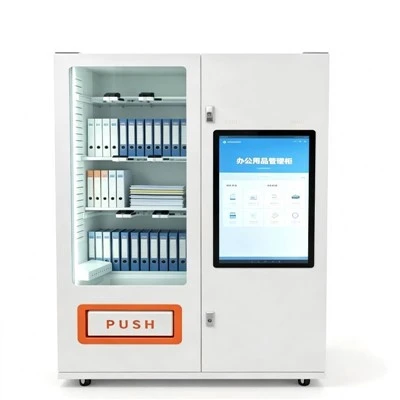
At the end of the day, it’s not about if you can use “any” smart key – it’s about if your smart key uses BLE or NFC. If it does, you’re good to go. If not, we’ve got options. Just reach out, we’ll sort it out. No stress, no hidden fees, just a cabinet that works for your team, your keys, and your budget.
Changing Cabinet References
- Bluetooth Special Interest Group. "Bluetooth Low Energy (BLE) Core Specification 4.0." 2010.
- International Organization for Standardization. "ISO/IEC 14443: Contactless Integrated Circuit Cards." 2018.
- National Fire Protection Association. "Code Requirements for Key Management Systems in Commercial Facilities." 2021.
- Smart Card Alliance. "NFC Protocol Specifications for Commercial Access and Key Management." 2019.
- Occupational Safety and Health Administration. "Best Practices for Commercial Key Tracking and Asset Management." 2020.
Hangzhou Dongjie Intelligent Technology Co., Ltd.
Hangzhou Dongjie Intelligent Technology Co., Ltd. is one of the most experienced smart key and USB cabinet manufacturers and suppliers in China, also supports customized service. Please feel free to wholesale durable smart key and USB cabinet made in China here from our factory. For quotation, contact us now.
Address: 1st Floor, Building 2, No. 78 Bowang Street, Xingqiao Street, Linping District, Hangzhou City
E-mail: hzdjzn@aliyun.com
WebSite: https://www.cndongjiesmart.com/
