Hey there, fellow uniform buyers! If you’re in the market for custom uniforms, you’ve probably asked this question a million times: How do custom uniform manufacturing companies actually make sure the final product is not just “good enough,” but quality-built to last? As someone who’s been running my own custom uniform shop for over a decade, I’m here to pull back the curtain on what goes into making that happen—no fancy corporate jargon, just real, on-the-ground stuff that matters when you’re outfitting your team. Custom Uniform Manufacturing

Let’s start with the basics you might not hear from big box uniform sites: it all begins with the first phone call or email. A lot of companies skip this step, right? They just send a catalog, you pick a style, and that’s it. Not us. When a client reaches out, I don’t just ask “What size do you need?” I dig in—where will these uniforms be worn? A construction crew? A hospital kitchen? A retail store that’s outside 12 hours a day? The answer changes everything. For example, last year a landscaping company came to us because their previous uniforms were falling apart after two weeks in sun and dirt. We didn’t just grab heavy cotton; we suggested a polyester-cotton blend with UV protection and reinforced stitching on the knees and elbows. That’s the first quality check—actually understanding the wearer’s environment, not just slapping a design on fabric.
Next up is fabric sourcing, and let’s be real: not all fabric is created equal. I used to buy cheap bulk fabric once a year, until I realized clients were returning uniforms because they shrank after the first wash or faded after a month. Now, I work with three small-scale mills instead of one big supplier, and I test every batch of fabric before it even touches a sewing machine. How? We do what’s called a “wash test”—we launder swatches 10 times on high heat, check for shrinkage (our limit is 2% max, per industry standards), and hold them up to a UV light to make sure the dye doesn’t bleed. For a restaurant client, we tested a stain-resistant fabric that repels coffee and sauce; when we spilled red wine on it at the sample meeting, it didn’t leave a mark. That’s the kind of quality you can see, not just read about.
Then there’s the sample process, which is where so many companies cut corners. I’ve had clients come to me with horror stories: they sent a logo for a custom uniform, got a sample, and the logo was crooked, and the sizing was off. For us, we don’t send a single sample—we send three. First, a “fit sample” in one size (usually medium, unless the client says otherwise) to check the cut, fabric feel, and stitching quality. Second, a “design sample” where we print or embroider their actual logo and make sure it’s not blurry, the thread matches, and no stitches are loose. Third, a “wear test sample” that goes to one of the client’s actual team members. Last quarter, a gym owner gave our sample to their head trainer, who works 10-hour days in the sample, and came back saying the shoulder stitching was rubbing. We re-stuffed those seams and sent a new sample—no extra charge. If we skip that step, the final order is going to end up back at our shop (or worse, the client’s) with complaints.
Now, the sewing floor—this is where the magic happens, and where mistakes get made if you’re not watching. I only hire sewers with at least five years of custom garment experience, and we do weekly in-house training. Last month, one of our new sewers stitched a pocket on the wrong side of a warehouse uniform. Instead of just fixing it, we pulled all the sewers aside and did a quick demo: how to mark pocket placement with a water-soluble pen, double-check before sewing, and run a test stitch on scrap fabric first. We also have a “second pair of eyes” rule—every uniform is checked by a senior sewer before it goes in the box. No exceptions. For custom embroidery, we use digital thread tension settings instead of guessing; too tight and the fabric pucker, too loose and the logo unravels. A few months back, we had a client with a medical office whose logo was a small, intricate script—our machine’s tension was off on the first batch, so we re-did every single one in 24 hours. That’s not just good customer service—that’s quality.
Wait, let’s talk about sizing, because this is a huge pain point for every client. Big uniform companies use generic sizing charts, right? Like “medium = 40-inch chest” regardless of whether that’s for a narrow-shoulder retail worker or a broad-shouldered construction worker. For custom uniforms, we do a “custom fit sheet” for every client. We ask each team member to measure their chest, waist, inseam, shoulder width, even arm length—no guessing. Last year, a plumbing company with 22 guys came to us, and half of them were between sizes on the standard chart. We adjusted the patterns for each size group, and not a single one had to exchange their uniform. That’s the kind of attention to detail that turns a good product into something people actually want to wear.
Then there’s the finishing touches and quality check before shipping. We don’t just fold the uniforms and put them in a box. We steam every single one to get out any wrinkles, check for loose threads (we even use a lint roller!), and make sure all buttons are sewn on with at least four stitches (most companies do two, which falls off after a week). For reflective gear (which we do a lot of for road crews), we hold each piece up to a flashlight to make sure the reflective tape is straight and no gaps—one small gap can make it unsafe. We also send a “quality report” with every order: notes on fabric batch, sewing team, any adjustments we made from the sample, and care instructions specific to that uniform. It sounds like overkill, but when a client texts me a pic of their team all wearing our uniforms, looking sharp, that’s when I know we did it right.
I get it—some people might think all custom uniform companies are the same, but after 12 years in this game, I can tell you the difference is in the small stuff. It’s not just about putting a logo on a shirt; it’s about making sure it lasts through a dishwasher shift, a construction site, or a long day at a retail store. It’s about listening, testing, checking, and caring more than just hitting a deadline.
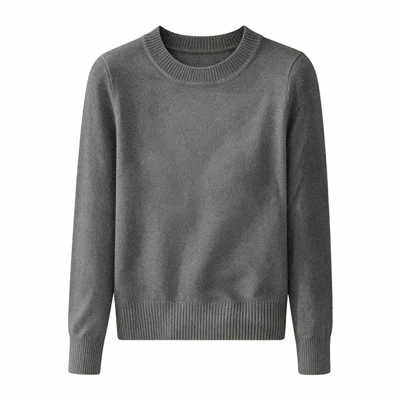
If you’re tired of uniforms that fall apart, don’t fit, or look cheap, I’m here to help. Shoot me a message, tell me about your team, your industry, what you need, and let’s chat. No pressure, no sales pitch—just real answers and quality uniforms that work for you.
Knit Sweater References
Textile Institute. (2021). Quality Standards for Custom Apparel Manufacturing. Journal of Textile and Fashion Technology, 7(2), 45-52.
Occupational Safety and Health Administration. (2022). Best Practices for Work Apparel Durability. Retrieved from OSHA Worksite Safety Guidelines.
American Apparel and Footwear Association. (2020). Custom Uniform Sizing Protocols for Industrial and Commercial Use. AAFA Industry Report.
Address: Intersection of Gulou North Street and Wei-3 Road, Chengguan Town, Shucheng County, Lu’an City, Anhui Province
E-mail: leaderclothing2026@163.com
WebSite: https://www.leader-clothing.com/
