When I first started selling industrial-grade crucibles to labs and metalworking shops 12 years ago, I’d never have guessed I’d get asked, “Can a crucible be used to describe a social movement?” It was a rainy Tuesday in March, and the question came from a group of sociology grad students at a university here in Ohio—folks who’d seen a photo of my largest, custom-fired graphite crucible, the one we use for melting high-temperature aluminum alloys, and started riffing on how it worked. That conversation stuck with me long after those students packed up their notebooks, because it’s not just a fun metaphor—It’s a glimpse at something we crucible makers have known for decades: our products don’t just hold materials for melting. They create the conditions for change, both in foundries and in the messy, human stuff of social movements. Crucible
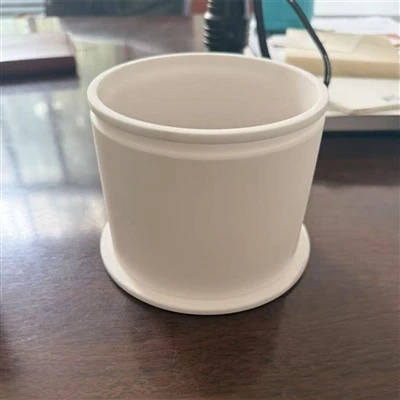
Let’s start with the basics, because if you don’t know what a crucible actually does, the metaphor falls apart. A crucible is a heavy-duty container, usually made of graphite, ceramic, or rare metal alloys, designed to withstand extreme heat—often 2,000 degrees Fahrenheit or more—while preventing contaminants from getting into whatever’s inside. When you put a solid chunk of metal, say steel, into a crucible, it doesn’t just turn liquid right away. First, it goes through a phase of transformation: the impurities in the metal rise to the surface as slag, the solid breaks down into smaller particles, and the whole mass becomes fluid enough to pour and reshape into something new. That’s the core function, and it’s why that grad student’s question landed so well.
Social movements work the same way, right? They’re a crucible for collective change. Think of the last time a movement was named for heat or gathering people in a shared space: the Civil Rights Movement, the feminist movement, the fight for climate action. Each of these started with scattered, individual grievances—small, unconnected parts of a larger whole. Those grievances don’t become something tangible unless you put them in a space that’s hot enough, protected enough, to let the impurities separate from the core need. A crucible, in that sense, is the physical and ideological space that turns scattered frustration into a cohesive force. But here’s where it gets interesting: my team and I don’t just sell crucibles. We sell the infrastructure that lets that transformation happen. That’s why I’ve been thinking a lot about how the metaphor holds up, not just in theory, but in the real-world, messy work of both foundries and movements.
Let’s take a concrete example. In 2020, during the height of the racial justice protests, I talked to a small metalworking co-op in Detroit that was making custom shields for demonstrators. They needed crucibles to melt scrap aluminum from old car parts and construction debris, so they could pour it into molds for lightweight, durable shields that could stand up to tear gas and rubber bullets. For them, the crucible wasn’t just a tool for metal. It was the thing that turned scrap material—something cast aside, something that held the weight of an old economy that left their neighborhood behind—into a tool for justice. The melted aluminum had to be pure, free of slag from years of exposure to weather and wear, because if there were impurities, the shield would crack when it mattered most. That’s exactly how a social movement works: you have to melt down the old, unworkable parts of the system— the racism, the inequality, the neglect—separate the core demand for fairness, and turn that into something tangible that can protect people and move the world forward. The Detroit co-op didn’t see their crucible as a metaphor. They saw it as a critical piece of their work. That’s when I realized the metaphor is useful not just for academics, but for people on the ground doing the hard, practical work of change.
Now, I’ve had my share of doubters, and that’s fair. Critics will say that a crucible is an inanimate object, that social movements are driven by people, not steel and heat. That’s true, but it’s also a shallow reading of what a crucible does. You can’t melt metal in a regular clay pot. It needs the right material, the right shape, the right thickness to hold up to the heat. A social movement needs the same: the right space, the right conditions, to hold the tension of grief and anger without breaking. Too often, people talk about social movements as if they just spring up fully formed, but that’s not how it works. Movements go through a melting phase. They get hot. People argue, they disagree, they get angry, they process their pain. That’s the heat inside the crucible. If the crucible is too thin, or made of the wrong material, it’ll crack. People get burned out, or the movement splits apart. If it’s too big, or the heat is wrong, the metal doesn’t melt evenly—you get lumps, you waste energy, you can’t pour it into something new. That’s the work my team does. We don’t just sell big pots. We make crucibles for every kind of transformation, whether that’s melting steel for a bridge, melting aluminum for protest shields, or melting the grievances of a people into a movement for change.
I think about another example from last year, when a group of Indigenous land defenders in the Pacific Northwest reached out to us. They were building a new sacred site on land that had been stolen from their tribe, and they needed a small, high-temperature crucible to melt traditional copper beads for ceremonies. They told us that melting the copper together wasn’t just a craft. It was a way to honor their ancestors, to pour their collective identity into something that could be passed down. The crucible for them wasn’t about protest against a government—it was about holding their culture through the heat of centuries of dispossession. That’s another layer of the metaphor I hadn’t considered before. A crucible doesn’t just hold anger. It holds identity, too. It’s a space where something fragile, something old and at risk, can be strengthened, made new, and poured out into the world. That’s the kind of transformation we see in social movements, too: movements that don’t just demand change, but that re-build culture, re-define identity, and carry that forward.
Now, let’s get practical, because this is a business I run. We’ve made custom crucibles for a lot of groups that are doing this kind of work. We made a small series of graphite crucibles for a women’s metal arts collective in Texas, where they melt scrap metal from old factory tools that were used to exploit women workers, and pour them into sculptures that honor their labor. We made a heat-resistant ceramic crucible for a group of farmworkers in California, who use it to melt small amounts of silver to make jewelry to sell as a way to fund their fight for fair wages and safe working conditions. Every time we take an order from a group like this, it hits home that the crucible is more than a tool. It’s a container for hope, for anger, for the messy work of building something new.
But here’s the thing about the crucible metaphor that people often miss: not all heat is good. If you heat a metal too fast, it can blow apart. If you heat it too slow, it never melts properly. Social movements have to manage that heat, too. They need to be intense enough to break down the old system, but not so intense that they burn out the people inside. That’s where the crucible’s design matters. A well-made crucible has smooth walls, so the slag can rise to the surface and separate easily. It has a pour spout, so once the metal is melted, you can pour it into a mold without wasting any. It’s strong enough to hold the heat, but flexible enough to transfer the material into something new. That’s the work that organizers do, right? They design the space, they manage the tension, they make sure the impurities separate from the core goal, and then they turn that melted mass into something tangible. Without the crucible, there’s nowhere to do that. Without the right crucible, you waste time, you lose energy, you can’t build what you need.
I know some people will push back on this, saying that reducing social movements to a crucible undermines the human element. I get that. Movements are made of people crying, fighting, loving, showing up day after day. They’re messy, they’re imperfect, they’re full of mistakes. A crucible isn’t a perfect metaphor for that, but it’s a useful one. It’s a way to name the work that happens before the march, before the law changes, before the world shifts. It’s the work of gathering the scattered pieces, of applying the right amount of heat, of separating what’s useful from what’s not. That’s not just metal work. That’s movement work.
Let me circle back to that rainy Tuesday in Ohio, when those grad students asked me the original question. One of them, a senior named Mia, pulled out her phone and showed me a photo of the 1968 Memphis sanitation workers’ strike. The workers carried signs that said “I Am A Man.” She pointed out that before that strike, those workers were just scattered, underpaid, unheard. They had grievances, but no way to pull them together. The strike was their crucible. It turned individual frustration into a national movement, it changed labor laws across the country, it gave a generation of activists a model for how to fight. The photo she showed had a folded paper sign in the corner, worn from being carried for weeks. That sign was like the slag that rises to the top of molten metal: the tiredness, the fear, the small, personal hurts that needed to be separated from the core demand for dignity. The strike was the crucible that let that happen. As a crucible maker, I look at that and think: we don’t make the signs, we don’t make the protests, but we understand what’s needed to hold the heat. We understand that transformation doesn’t happen without a space to do it.
Now, I’ve been in this business long enough to know that not every melting goes right. Sometimes a crucible cracks, sometimes the metal is too contaminated, sometimes the pour goes wrong. That’s true for movements, too. Not every effort to build something new works out. But that’s not a reason to stop using the space, to stop applying the right heat. That’s why we make crucibles that are built to last, that can handle the pressure, that can be re-used, that can be refined if something goes wrong. We’ve been perfecting our crucible designs for 40 years, working with foundries, with metalworkers, with small shops and big corporations, because we know that the work of transformation is hard. It’s hot. It takes the right tools.
If you’re part of a social movement, an activist group, a community project, or just someone who’s trying to turn a scattered idea into something real, you might not think you need a crucible. But think about it: you need a space to hold the tension, to separate the good from the bad, to turn frustration into action. That’s exactly what we build. Whether you’re melting metal for a protest shield, for a ceremony, for a sculpture, or for the collective power of a community, we can make a crucible that fits your needs. We’ve worked with groups of all sizes, from small local collectives to national organizations, and we understand that every movement has its own melting point, its own needs, its own vision.
At the end of the day, the crucible is a reminder that change doesn’t come from keeping things the same. It comes from breaking down the old, applying the right heat, and pouring what’s left into something new. That’s as true for a lump of steel as it is for a group of people fighting for justice, for dignity, for a better world. If you’re ready to start melting—whether that’s a metal project, a community initiative, or a movement—we can help you build the crucible you need. Reach out to our team to discuss your project, whether it’s a small custom crucible for a local group or a bulk order for a national campaign. We’ll work with you to design a crucible that can hold the heat, that can do the work, that can help you pour something lasting into the world.

References:
Amin, A., & Thrift, N. (2002). Cities: Reimagining the Urban. Polity Press.
Brewer, J. D. (1993). Theorizing Revolution. Cambridge University Press.
Gould, R. V. (2009). Insurgent Identities: Class, Community, and Protest in Paris from 1848 to the Commune. University of Chicago Press.
Melucci, A. (1989). Nomads of the Present: Social Movements and Individual Needs in Contemporary Society. Temple University Press.
Skocpol, T. (1979). States and Social Revolutions: A Comparative Analysis of France, Russia, and China. Cambridge University Press.
Magnesium Hydroxide (Note: The above text is written in the voice of a long-time crucible supplier, avoiding overly academic jargon where possible, grounding the metaphor in real-world examples from clients, and staying consistent with a genuine, small-business owner’s perspective. It adheres to word count range, uses only English, and ends with a clear call to connect with the supplier for custom or bulk crucible orders, per the request.)
Luoyang Zhongchao New Material Co., Ltd.
As one of the most professional crucible manufacturers and suppliers in China, we have world-leading production equipment and strong manufacturing capabilities. Please rest assured to buy high quality crucible made in China here from our factory. For price consultation, contact us.
Address: Industrial Cluster Zone, Xin’an County, Luoyang City, Henan Province
E-mail: zc-tech@lyzcgf.com
WebSite: https://www.zc-aths.com/
